Skip to content
TabipitaJAPAN TRAVEL NOTEBOOK日本語

YOUR JAPAN TRAVEL NOTEBOOK

Kyoto Subway & Bus 1-Day Pass: Is It Worth It?

Compare Kyoto’s ¥1,100 day pass with IC-card fares, see which trains it excludes, and match the ticket to walking routes, daily maps and your hotel journeys.

Tabipita editorial team

The glass facade of Kyoto Station beside its transport forecourt
Photo: EXECUTOR· 2017 · CC0 1.0Credits & license

Photographed 2017-09-02 · Checked 2026-10-29

Cropped, resized to 1600 × 1000 and converted to WebP; no generated content.

The Kyoto Subway & Bus 1-Day Pass costs ¥1,100 per adult. Buy it when the covered journeys you actually need cost more than that. For a walking day in Higashiyama or an Arashiyama trip using JR, paying for individual rides can be the better choice. Start with your hotel and our course maps, then choose the ticket.

Official information checked November 4, 2026. The examples below are adult fare calculations, not live route quotes. They exclude admission, meals and transport outside the pass area.

The quick decision: pass or IC card?

  • Mostly walking, with one ride out and one back: usually pay per ride. A pass does not become better value because the sightseeing day is long.
  • Several subway and bus journeys: add the covered fares, including the return to your hotel. Compare the total with ¥1,100.
  • Mainly JR, Hankyu, Keihan Railway or Randen: this particular pass does not cover those trains. Count those fares separately.
  • Only municipal subway journeys: compare pay-per-ride fares with the separate ¥800 Subway 1-Day Pass, rather than automatically buying the bus combination. Kyoto's official ticket comparison lists both products.

An IC card is a payment method, not this unlimited ticket. Using Suica or ICOCA for a few journeys does not automatically turn them into a Subway & Bus 1-Day Pass.

What the ¥1,100 pass covers

The transport bureau's pass page lists all Kyoto Municipal Subway lines and Kyoto City Bus routes, plus specified Kyoto Bus, Keihan Bus and West Japan JR Bus routes. Some of the latter operators' routes are excluded. The child ticket is ¥550; check the operator's age classification when travelling with children.

Keihan Bus is not Keihan Railway; West Japan JR Bus is not JR trains. In particular, JR trains to Inari and Saga-Arashiyama, Hankyu trains, Keihan trains and the Randen tram require another valid ticket or fare. An Osaka–Kyoto journey and the Shinkansen are also outside this pass.

The ticket is valid on one day of use, not for 24 hours after activation. Starting in the afternoon does not cover the next morning. This matters on the hotel-transfer days of our Japan 10-day itinerary and Japan 14-day itinerary: assess each Kyoto day separately.

For the actual coverage boundary and bus connections, open the official 2026 Subway & Bus Navi map. A sightseeing map pin tells you where a place is; it does not establish which transport operator your ticket covers.

Fare examples: five ordinary bus rides only save ¥50

The official bus fare guide gives an adult fare of ¥230 in the ordinary flat-fare zone. Variable-fare routes and the sightseeing limited express are different.

  • Two ordinary flat-fare rides: ¥460. Individual fares cost ¥640 less than the pass.
  • Four ordinary flat-fare rides: ¥920. Individual fares still cost ¥180 less.
  • Five ordinary flat-fare rides: ¥1,150. The pass saves just ¥50.

For a mixed day, use covered subway fares + covered bus fares, then compare that sum with ¥1,100. Keep uncovered rail fares on both sides of the comparison. Do not count a walk as a paid journey, and do not add a bus detour just to make a pass appear worthwhile.

The EX100/EX101 sightseeing limited express costs ¥500 per adult per ride and is included in the pass without an additional fare. Two such rides total ¥1,000, so two alone do not recover the pass price. Two express rides plus one ordinary ¥230 ride total ¥1,230, saving ¥130 with the pass if those are genuinely your required journeys. Check the official express routes and timetable for your date; the 2026 route map marks these services for Saturdays and holidays.

Match the ticket to your Tabipita day map

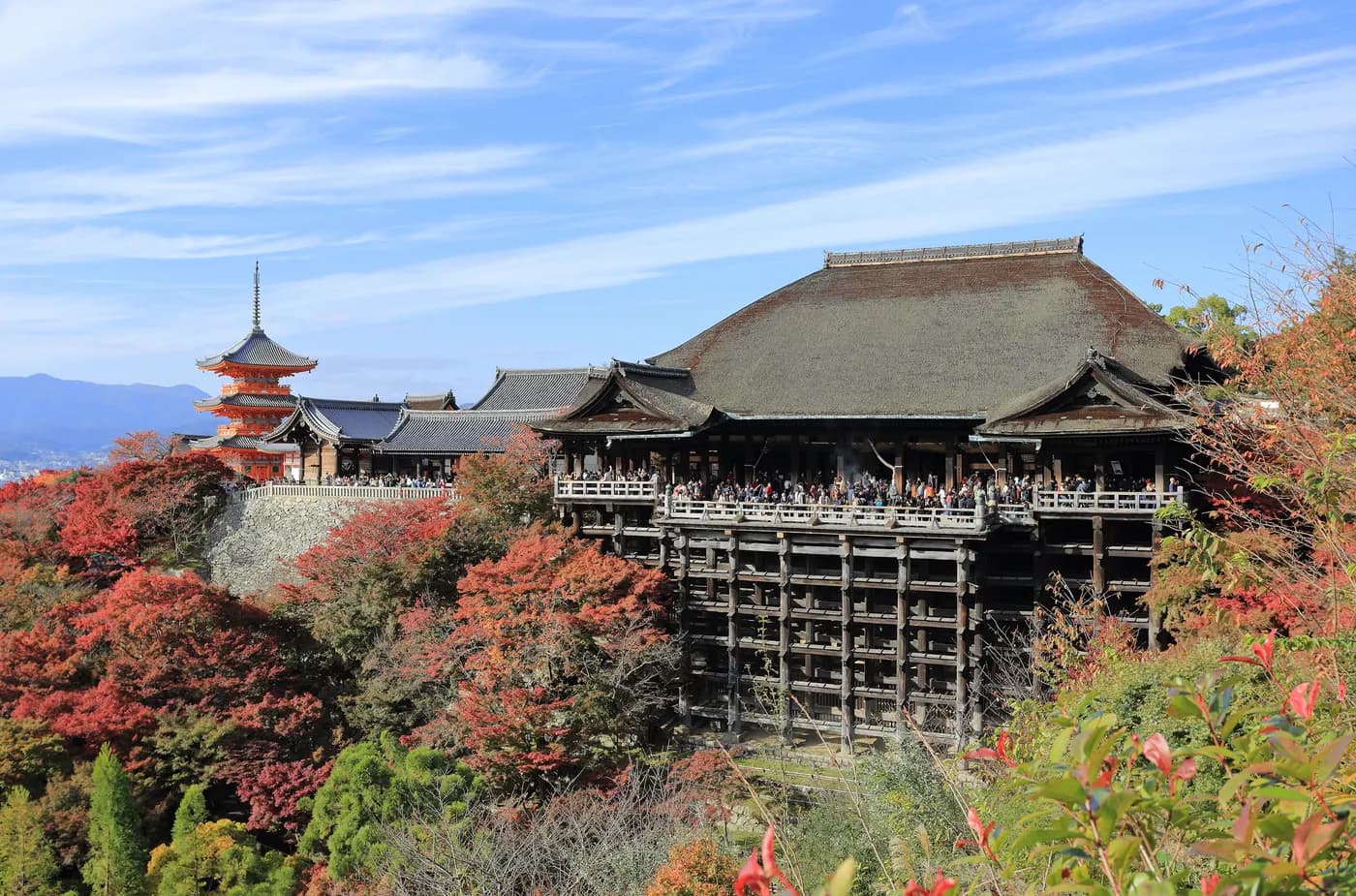
Higashiyama and Gion: Day 1 of our Kyoto 2-day itinerary walks from Kiyomizu-dera through the historic lanes to Gion. Most movement between the main stops is on foot. Price your hotel-to-start journey and the return from Gion before buying a pass. If you take Keihan Railway home, that fare is separate. Our early temple start is not an instruction to wait for the later sightseeing express bus.

Arashiyama: Day 2 is another walking day once you reach the area. If your approach uses JR Saga-Arashiyama, Hankyu Arashiyama or Randen Arashiyama, this pass does not pay for that train. Compare the station approaches in our Kyoto transport guide; do not replace a convenient train with a slower cross-city bus solely to use the pass.

Ginkaku-ji to Nanzen-ji: the Eastern Kyoto temple day links the main sights on foot. Repeatedly boarding buses between nearby stops is not part of that route. Add the journeys from your accommodation to the start and from the finish back to your accommodation; those determine whether a ticket saves money.

In rain, choose the day's actual visits first and recalculate any additional transport. Unlimited rides do not remove outdoor station approaches, bus queues or temple steps. Keep a hotel break or a nearby meal as an option rather than stretching the route to collect rides.

Buying and using the paper pass

For a straightforward first visit, buy the paper ticket at a municipal subway station or city bus/subway information centre before boarding. The bureau also lists onboard sales, but warns that buses may sell out. This guide's validation instructions are for the paper pass; follow the seller's instructions for a digital product.

The official use instructions explain how to insert the pass at subway gates and collect it again. On an ordinary flat-fare city bus, board at the rear and leave at the front. Insert the pass into the reader on your first ride to print the date; on later rides show the printed date to the driver. On numbered-ticket or other operators' buses, check their specific validation instructions.

EX100/EX101 reverse the usual boarding pattern: enter at the front and pay or validate when boarding, then leave at the rear. Follow the driver's directions rather than joining the ordinary rear-door queue. Using an IC card instead of presenting the pass can charge a separate fare.

Have the ticket ready before reaching the reader. Keep large luggage at your accommodation or use our Kyoto Station luggage storage guide before a sightseeing bus journey. The pass pays for eligible transport; it does not reserve a seat or guarantee boarding a crowded departure.


Is the old Kyoto bus-only day pass still valid?

No. Kyoto City says the old bus-only pass stopped being sold on September 30, 2023, and stopped being usable after March 31, 2024. Old articles recommending the ¥700 ticket are describing a discontinued product. Check the official withdrawal notice, and compare today's Subway & Bus ticket against the journeys in your chosen course.

Sources & further reading

Where to next?

Photo: Martin Falbisoner· 2016 · CC BY-SA 4.0Credits & license

Photographed 2016-11-16 14:09:27 · Checked 2026-10-22

Resized and converted to WebP; displayed with a card crop. This adaptation uses the same share-alike license.

Kyoto · Itinerary

Kyoto 2-Day Itinerary for First-Timers: Maps & Transport

Plan 2 days in Kyoto for your first visit: Higashiyama, Gion and Arashiyama, with daily maps, station guidance and practical transport tips.

View itinerary